Hawthorn
Crataegus monogyna
You may rest beneath it. You may not cut it down.
Overview
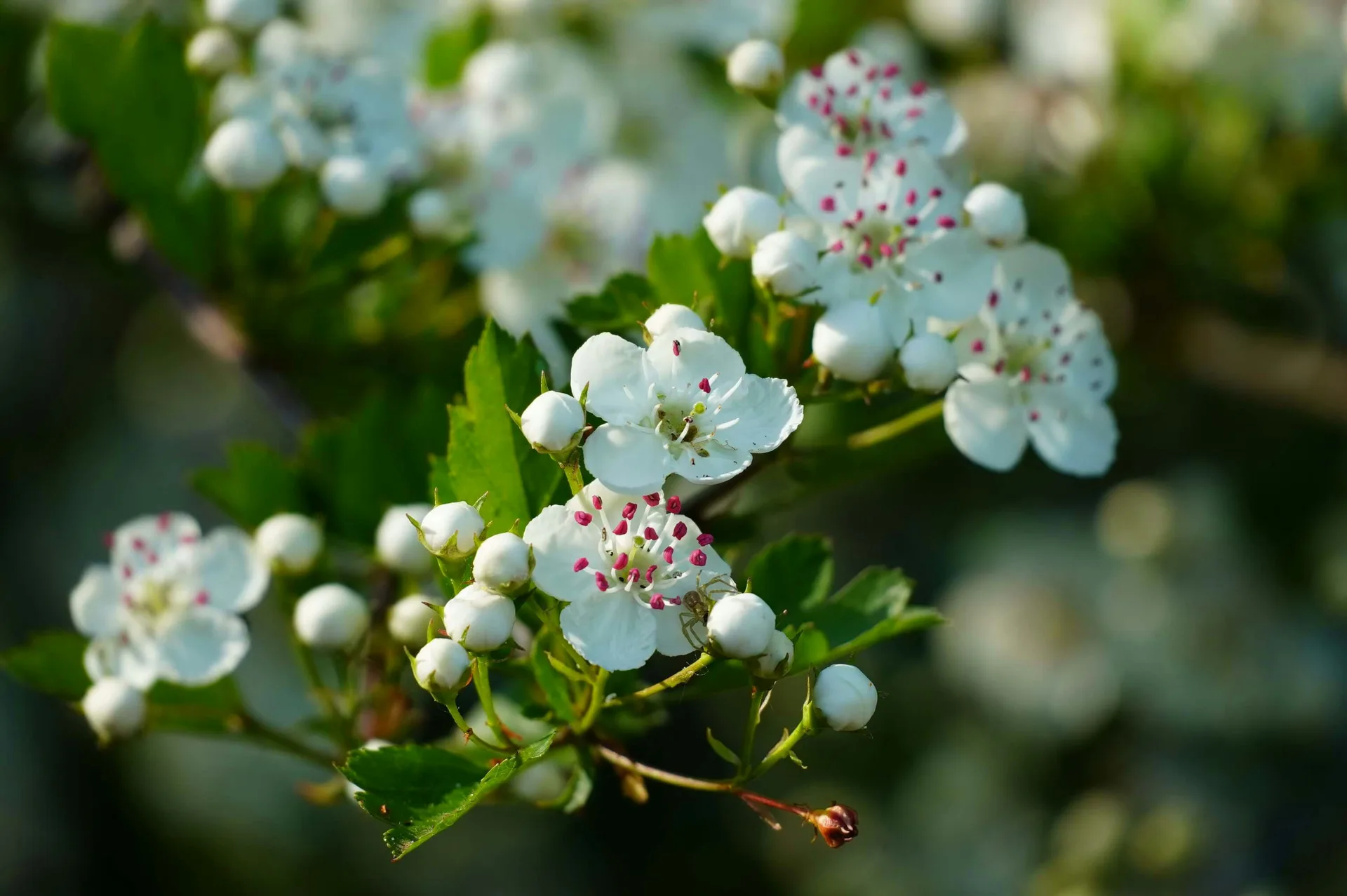
Hawthorn is the most hedged, most storied, most deeply woven tree in the British Isles. It has been marking boundaries and guarding fields for ten thousand years — older than most of the settlements it surrounds. In May it erupts into dense white blossom with a smell that is sweet at a distance and, closer up, faintly of decay: trimethylamine, the compound of rotting flesh and new life alike. The same chemical, in different concentrations, in different contexts. Hawthorn has always understood that the line between those things is permeable.
Botanical Notes
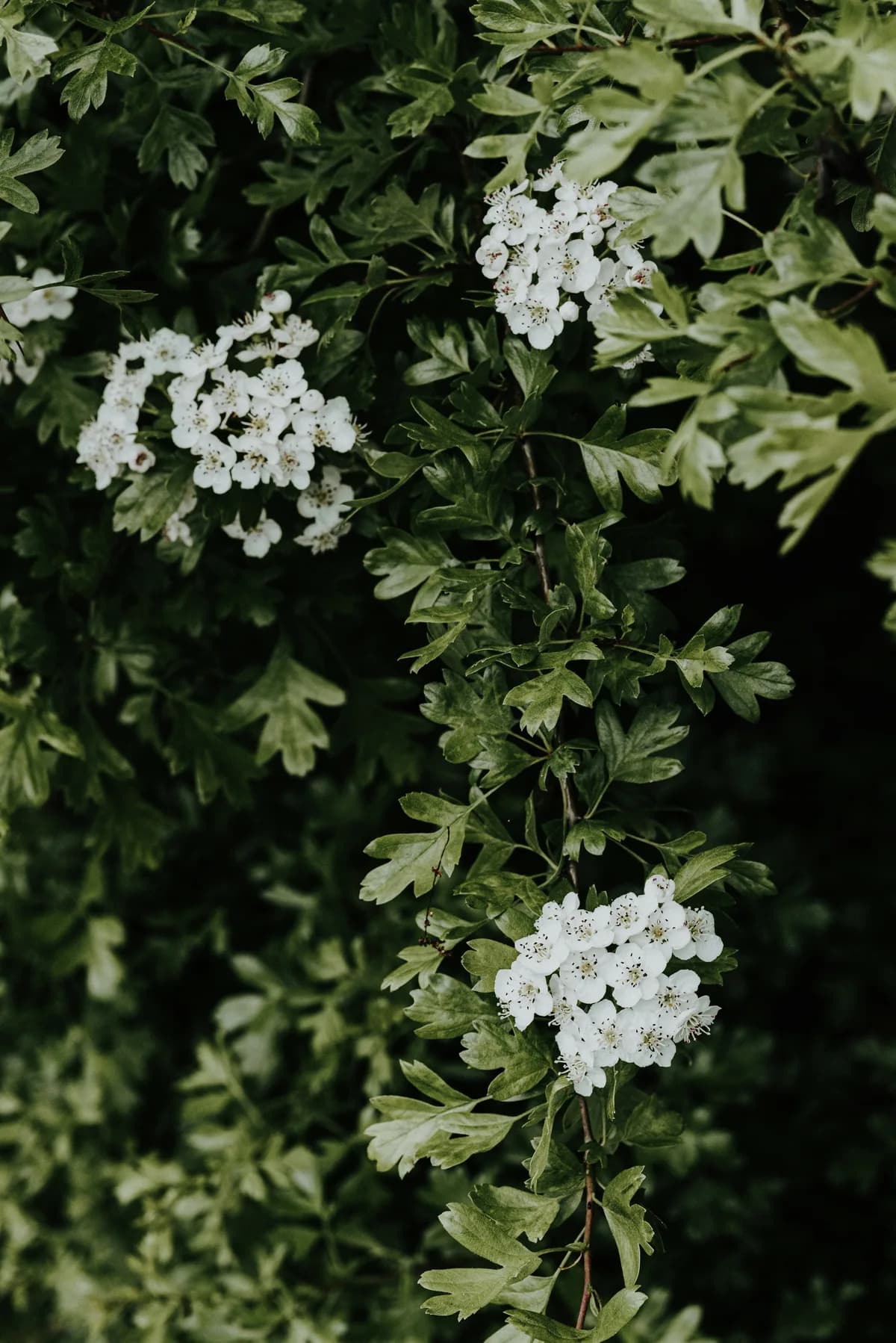
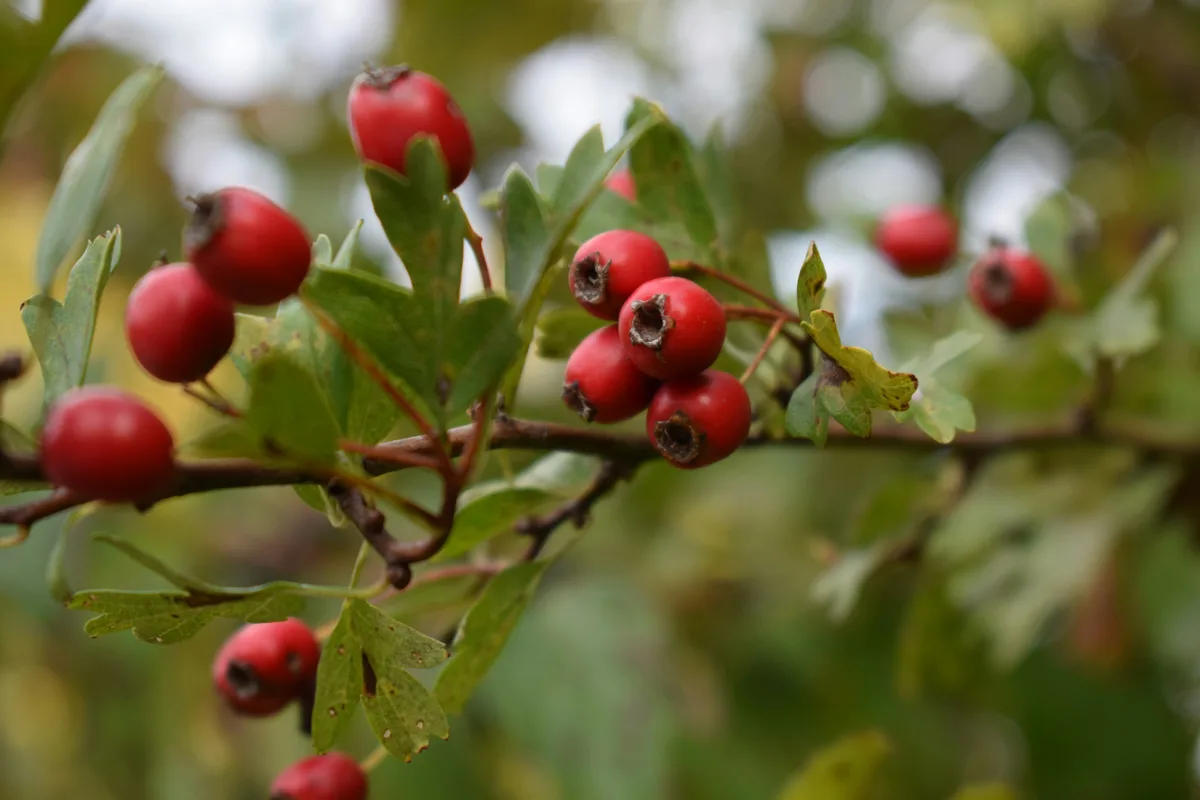
A thorny deciduous shrub or small tree to 10 metres, with deeply lobed leaves, dense white five-petalled flowers in flat-topped clusters from April to June, and dark red berries — haws — in autumn. Extremely hardy; tolerates exposure, poor soil, and heavy cutting. The dominant hedgerow species of the British and Irish countryside. Berries are high in flavonoids and oligomeric proanthocyanidins with well-documented cardiovascular effects.
Lore & History
In Irish and British tradition, solitary hawthorns growing in fields — fairy thorns — were never cut. Farmers ploughed around them for generations rather than risk offending whatever lived beneath. Road engineers have rerouted roads. The prohibition persists into living memory. Hawthorn is sacred to Beltane, flowering at the threshold between spring and summer, and it was unlucky — deeply, seriously unlucky — to bring the blossom indoors before May Day. In Christian overlay it became the Crown of Thorns, and the Holy Thorn of Glastonbury, said to have grown from Joseph of Arimathea's staff, flowers twice a year and a cutting is sent to the monarch at Christmas.
Warnings
Berries, leaves, and flowers are safe in normal use; hawthorn is one of the most extensively studied cardioprotective herbs in clinical literature. However, its genuine cardiovascular effects make it a caution for those on heart medications — it potentiates digoxin and other cardiac drugs and may interact with antihypertensives. Not a replacement for prescribed cardiac treatment. The thorns are long, hard, and capable of causing serious puncture wounds that can introduce infection.