Elder
Sambucus nigra
Guardian of the threshold between worlds.
Overview
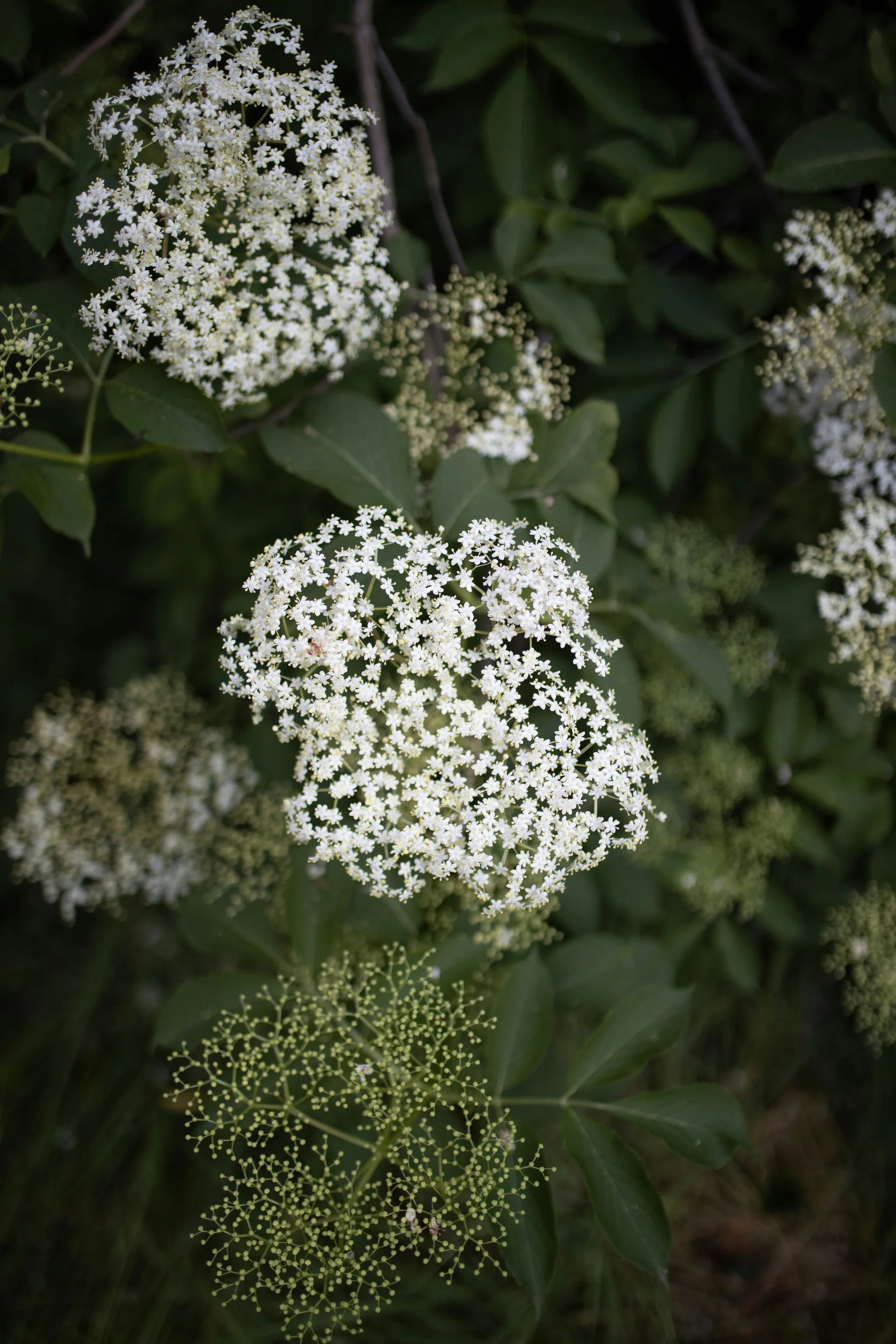
The elder stands at the edge of things — at field margins, near old walls, beside churchyards. It is a tree of boundary and passage, neither entirely wild nor cultivated, neither wholly useful nor useless. Its flowers smell of summer and its berries make fine wine, yet the raw bark, leaves, and unripe fruit carry enough cyanogenic glycosides to cause suffering.
Botanical Notes
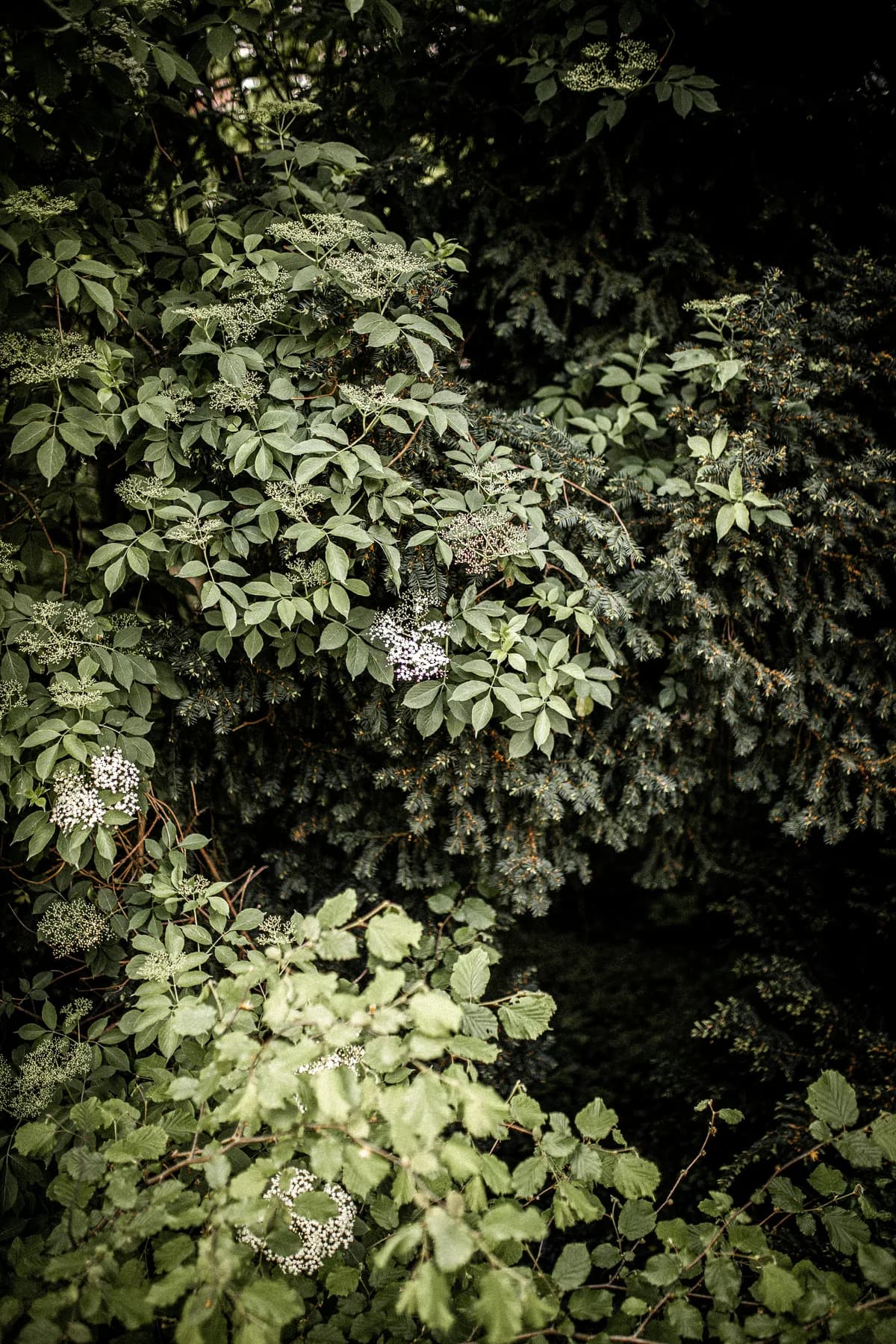
A deciduous shrub or small tree to 10 metres, with soft pithy stems easily hollowed. Compound leaves of 5–7 leaflets; large flat-topped clusters of cream-white flowers in early summer; drooping bunches of dark purple-black berries in autumn. Common across Europe and the British Isles in hedgerows, wood margins, and waste ground.
Lore & History
In English and Scandinavian tradition, the elder was governed by a spirit — the Elder Mother, or Hyldemor — who must be asked permission before any branch was cut. To burn elder was considered deeply unlucky. Crosses of elder wood were placed on graves to protect the dead. In some accounts, the elder was the tree from which Judas hanged himself.
Warnings
Raw berries, bark, leaves, and unripe flowers contain sambunigrin, a cyanogenic glycoside. Eating large quantities of raw berries causes nausea and vomiting. Cooking destroys the compound; elderberry syrup and elderflower cordial are safe when properly prepared. Avoid bark and leaves internally.