The Poisoner's Garden
Some gardens are built for healing. Others were built as warnings. A tour of history's most deliberate collections of the deadly and the dangerous.
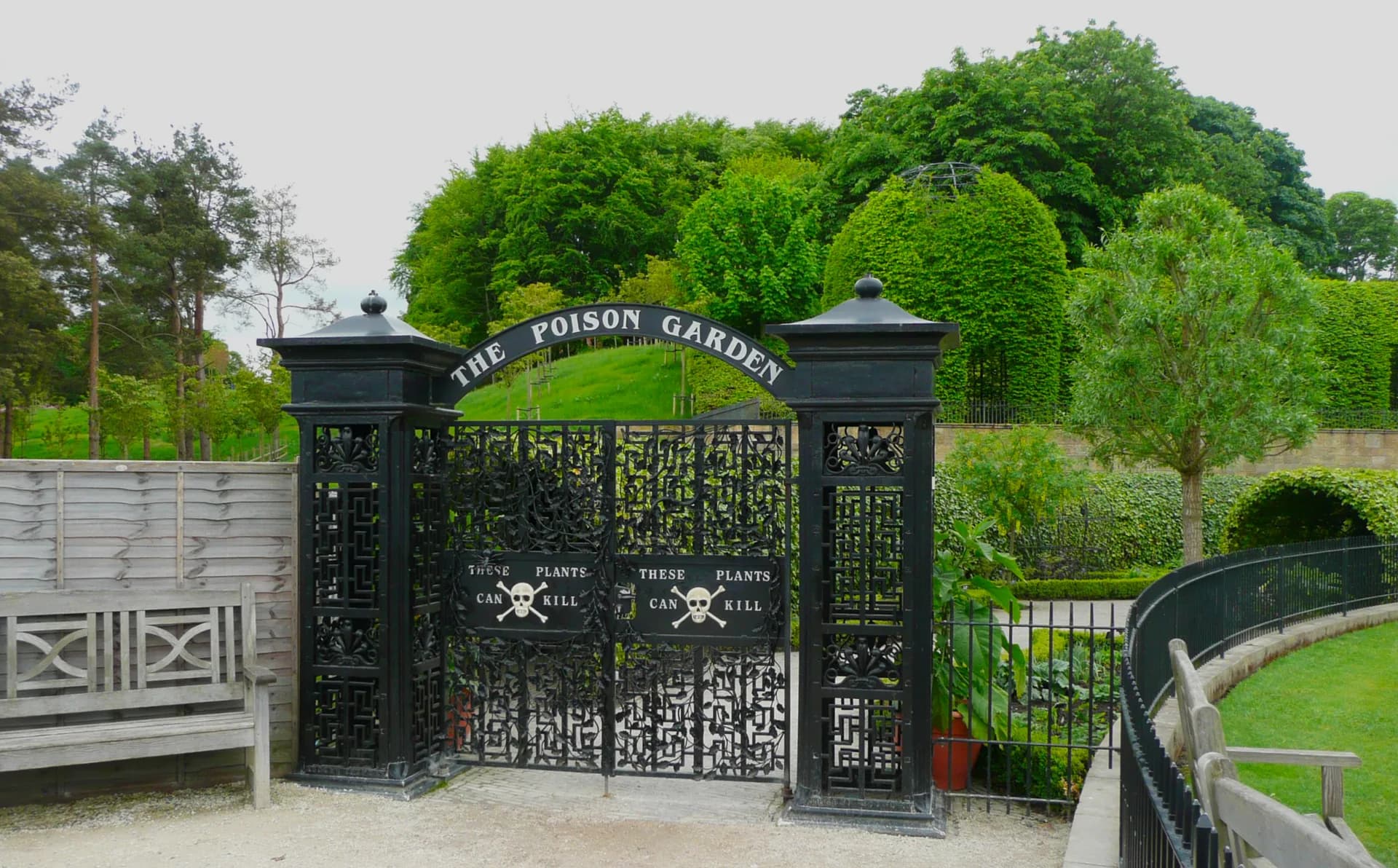
There is a garden in Northumberland that will kill you.
Alnwick Garden, in the grounds of Alnwick Castle, is openly, deliberately, almost cheerfully toxic. Behind black iron gates, under warning signs, grow belladonna and hemlock, mandrake and foxglove, tobacco and cannabis and opium poppy. Schoolchildren visit on field trips. The guides are enthusiastic. It is one of the most visited gardens in England.
It is also the inheritor of a very long tradition.
The Poison Garden as Idea
The deliberate cultivation of toxic plants is as old as agriculture. Every early pharmacopoeia — Egyptian, Sumerian, Greek, Chinese — contains plants that heal in small doses and kill in large ones. The line between a physic garden and a poison garden has always been a matter of intent and quantity, not of the plants themselves.
But the poison garden as a distinct, curated, intentional space is a Renaissance invention, born from the same impulse that produced the cabinet of curiosities and the anatomy theatre: a desire to confront dangerous knowledge in a controlled setting.
The most famous early example is the orto dei semplici at the University of Padua, founded in 1545 and still operating — the oldest academic botanical garden in the world. It was not exclusively a poison garden, but its collection of toxic specimens, including the deadly nightshades and the henbanes, was understood to serve a pedagogical purpose. To know a poison is to command it.
The Medici and Their Methods
The Medici family of Florence have a reputation — not entirely unearned — for the creative deployment of poison. Catherine de' Medici, who became Queen of France in 1547, is alleged to have brought Italian poisoning expertise with her as part of her cultural baggage, along with the fork and improved underwear.
The accusations are largely unfounded, or at least unproven. What is true is that the Medici maintained extensive gardens at their villas, including collections of toxic plants, and that they employed botanists who understood them. Whether this knowledge was used offensively is a question history cannot definitively answer.
What the Medici understood — and what every serious gardener of the period understood — was that the garden was a site of power. To control a plant was to control a possibility. The poison garden was not merely a collection of dangerous things; it was a library of contingencies.
Alnwick and After
The Duchess of Northumberland, who created the modern Alnwick Poison Garden in 1997, has said that she wanted something that would engage children who found traditional gardens boring. She succeeded spectacularly. The garden attracts over 800,000 visitors a year.
There is something important in this. The poison garden works because danger is interesting. We are drawn to the beautiful and the lethal in combination — to the glossy black berry, the elegant violet bell, the innocent-looking white umbel. The poison garden names this attraction and gives it a frame.
It is a moral institution as much as a horticultural one. To walk through it is to learn that beauty and danger are not opposites. That the most powerful medicines are poisons administered carefully. That the difference between a cure and a catastrophe is a matter of knowledge.
These are lessons that gardens have always been able to teach. The poison garden just makes them explicit.
What Grows in the Dark
Every serious herbalist maintains, somewhere in their knowledge, a section that corresponds to the poison garden. The plants that must be handled with gloves. The tinctures that are measured in drops. The roots that resemble edible things and are not.
This knowledge is not morbid. It is necessary. A herbalist who does not know the dangerous plants is dangerous herself — not through malice, but through ignorance. The poison garden is a reminder that green knowledge has always been double-edged, that the same root that heals can harm, and that the difference between the two has always required careful, sustained, respectful attention.
The gates are there for a reason. But they open.
Belladonna, mandrake, and foxglove — three of the most important residents of any poison garden — are catalogued in the Conservatory.