Foxglove
Digitalis purpurea
The heart that heals you can also be the hand that stops yours.
Overview
The foxglove is one of the most important medicinal plants ever discovered — and one of the most dangerous. William Withering identified its use for dropsy (congestive heart failure) in 1785, beginning a lineage of cardiac glycosides that runs to modern digitalis preparations. The same action that slows and strengthens a struggling heart becomes fatal in overdose. It is a plant that teaches restraint.
Botanical Notes
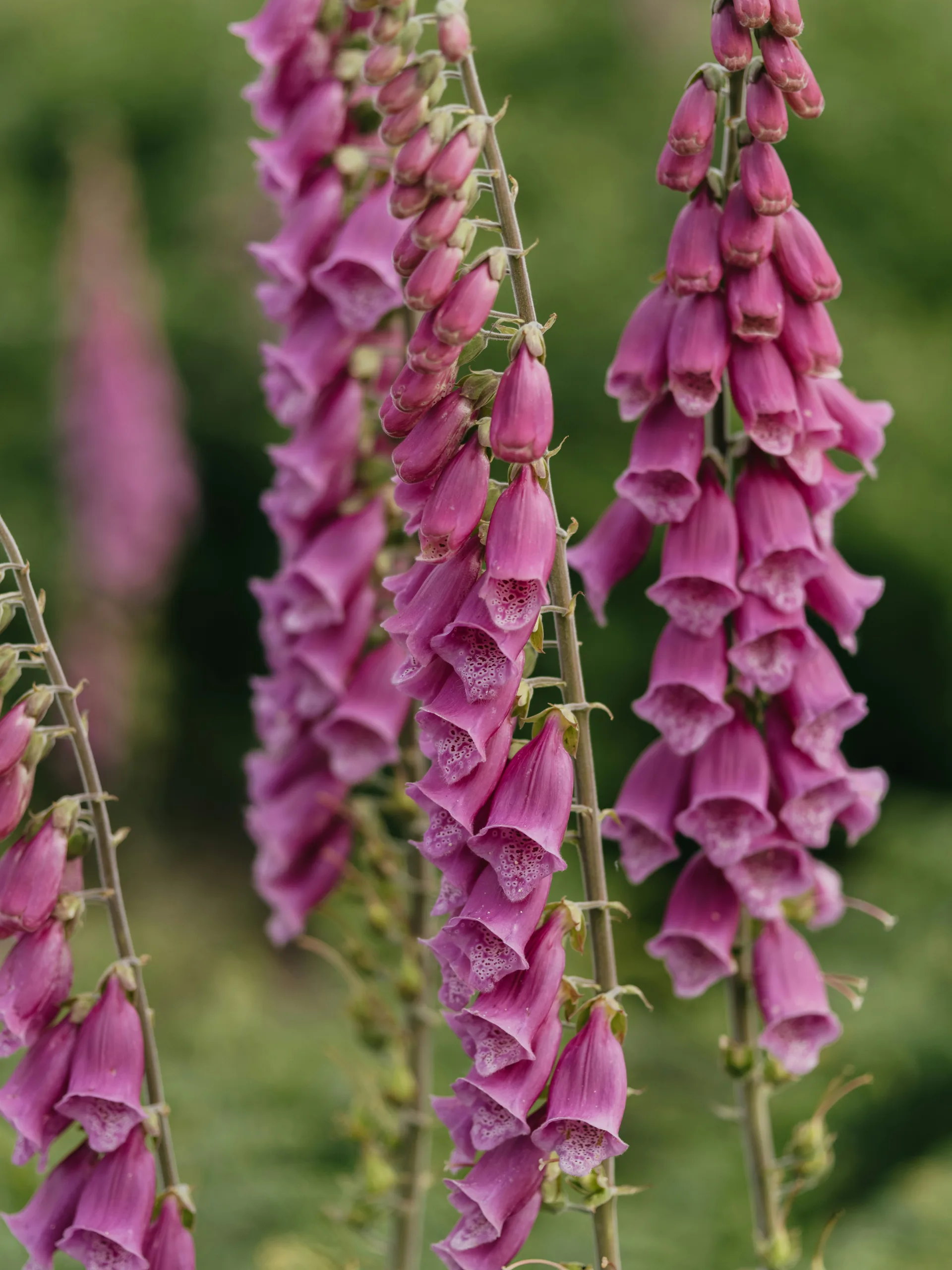
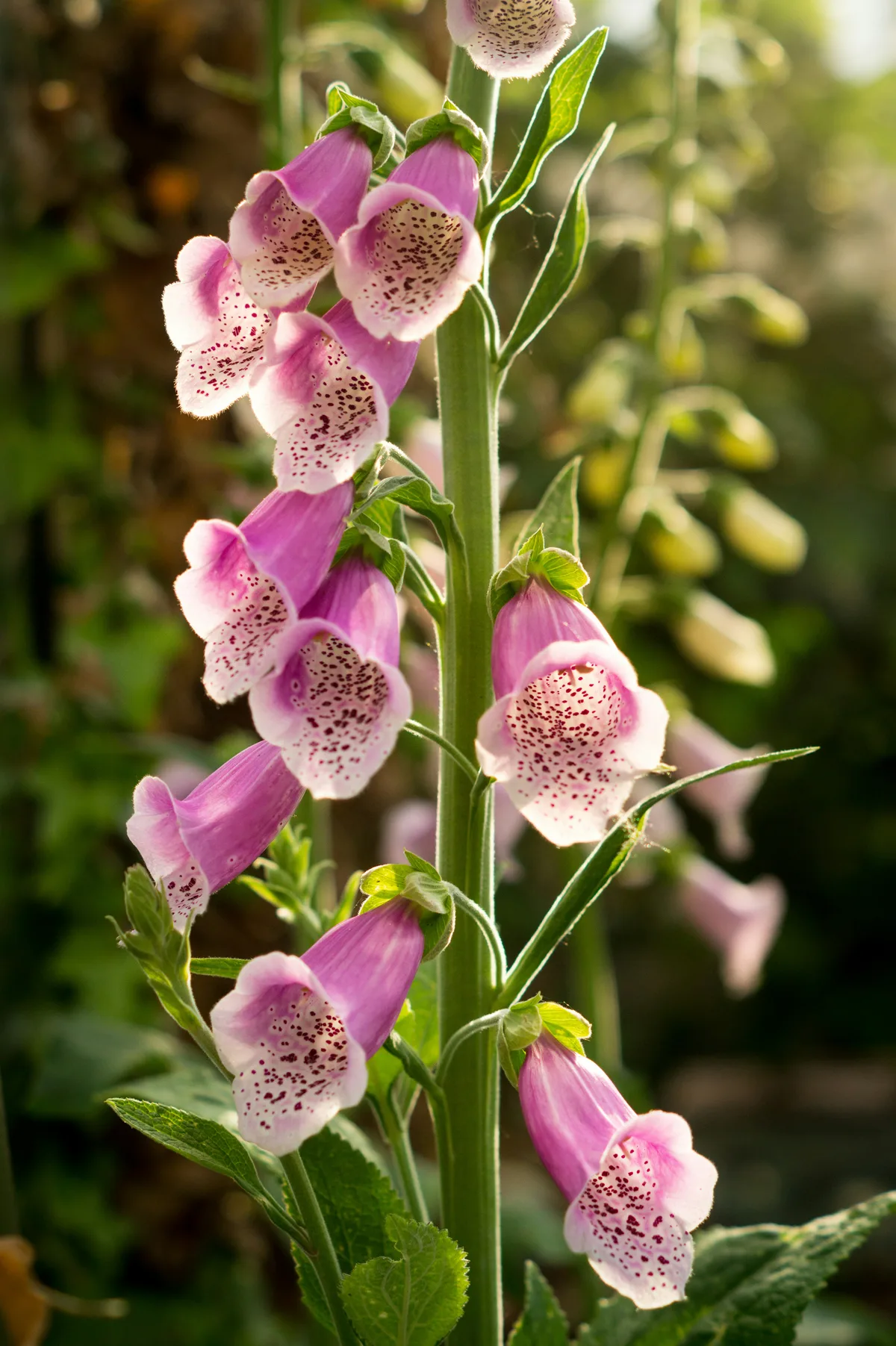
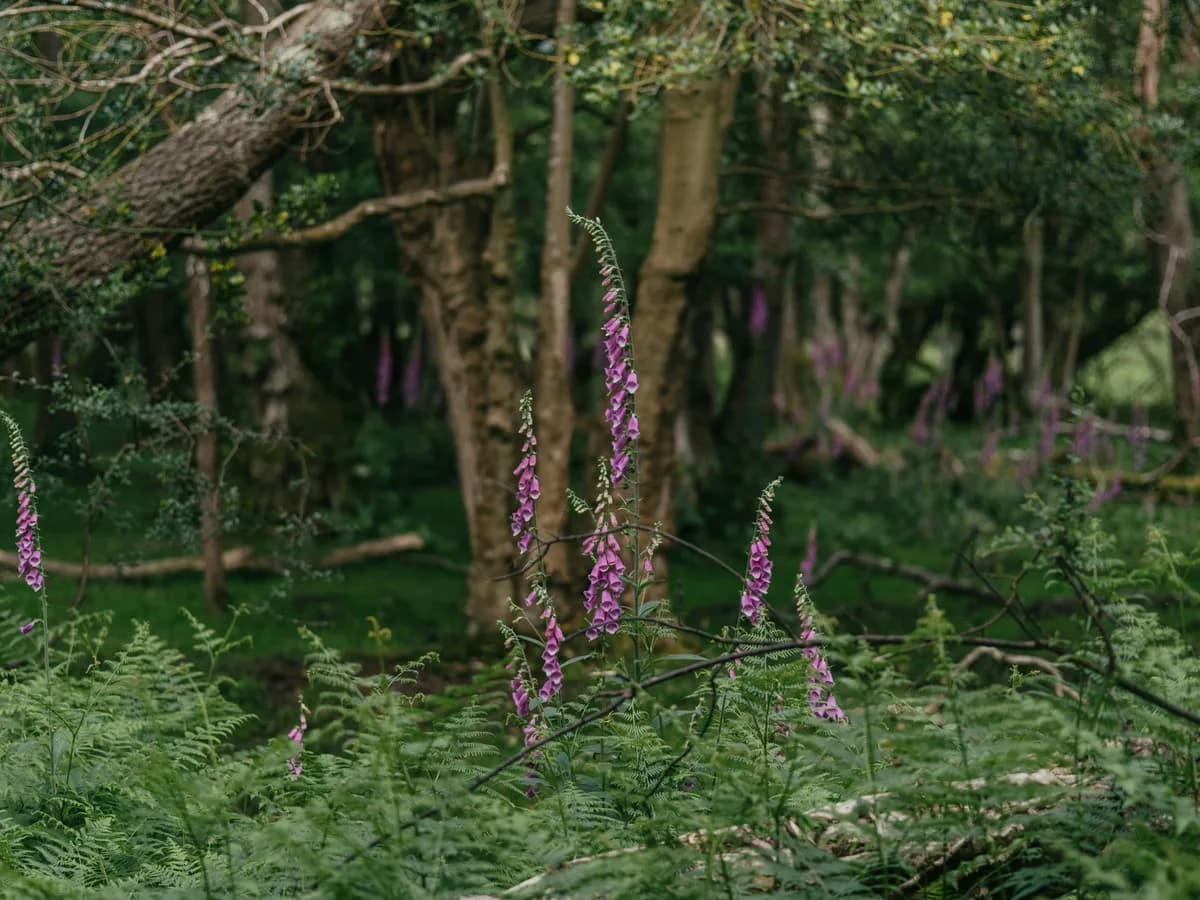
A biennial or short-lived perennial reaching 1–2 metres. First-year rosette of large, woolly, grey-green leaves; second-year tall raceme of pendant, tubular flowers of deep pink to purple with dark-spotted interiors. Common on acid soils in woodland clearings, heathland, and hillsides throughout western Europe. Self-seeds freely and colonises cleared ground.
Lore & History
The name "foxglove" is of uncertain etymology — some say "folk's glove," referring to the fairy folk who wore the thimble-sized flowers. Others see it as a corruption of "foxes' gloves," the fox using them as a mark of craft and cunning. It appears in Welsh legend as the source of fairy spots. Victorian poisoners were documented using the leaves; it appears in at least one famous murder case.
Warnings
All parts toxic at low doses. Cardiac glycosides (digitalin, digitoxin) cause bradycardia, heart block, nausea, visual disturbances (yellow-green halos around lights), and death. Do not confuse first-year leaf rosette with comfrey or borage — a historically fatal error. Even handling the leaves and touching the eyes has caused symptoms.